
Our Minds and Data:
Collection to Connection
Intelligence ≠ Data
We often mistake accumulation for intelligence: facts memorized, files stored, data hoarded. All of it a quiet conflation—information being mistaken for understanding.
More is better. But more is not meaning. This belief is deeply embedded in how are taught, evaluated, and therefore how we build our digital systems.
We are told, “Read this—there will be a test.”
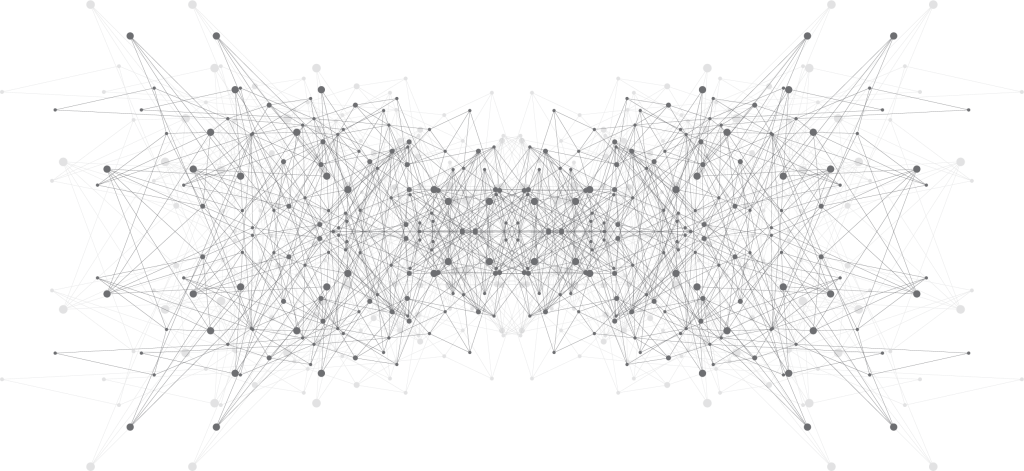
Intelligence cannot be built on volume alone. It emerges from connection. From how ideas relate, conflict, support, and evolve together. This principle applies as much to human cognition as it does to data systems.
You may remember what you have read, heard, then said—but unless you can bridge that knowledge across domains into decision-making, empathy, innovation… it’s all dead in the water.
Think of it as being at a dinner party, and there’s a broad ranging, but engaging conversation going on around the table. Midway, you simply start stating facts about the topic at hand, but missed the tone, aim and context of the conversation. That’s simply the injection of data without scope.
True intelligence is synthesis, not storage. It’s the ability to see and shape meaningful truths from disparate signals.
This holds just as true in the domain of data science. We are drowning in petabytes of telemetry, imagery, and social noise — yet still often feel lost. Information saturation doesn’t create clarity. If anything, it generates analysis paralysis. This is signal fatigue.
Just like our minds, data systems suffer fragmentation, under-utilization, and entropy when connections are weak—or absent altogether. Knowing how to search or retrieve information is a useful skill, but it is not understanding.
It’s the difference between having ingredients and knowing how to cook.
The Flexible Interpretation of Raw Data
We often refer to “raw data” when describing everything from satellite telemetry to JSON, unedited imagery, all the way down to a CSV export. But the concept of rawness is misleading. All data is shaped by how it’s collected, by the architecture of the sensors, by formatting standards, calibration protocols, and by human intent.
In Earth Observation (EO), raw data includes atmospheric distortion, platform noise, orbital drift, etc. Even what we choose to collect is shaped by economic, political, or institutional bias. Across finance, health, climate, and defense—sensors are not neutral. They are embedded within designed systems, influenced by incentives.
Raw data is not objective truth. It is preprocessed perspective. What matters isn’t its untouched state, but how it is framed, structured, and—most importantly—connected to other signals in pursuit of a goal.
Truth and reality are nevertheless different things, because no matter how truthful an account is, it can never represent reality in all its aspects.
The very act of counting entities—whether apples, oranges or soldiers—necessarily focuses attention on the similarities between these entities while discounting differences.
— Yuval Noah Harari, Nexus
What Are We Even Supposed to Do With It All
Imagine being handed a petabyte of EO data: satellite imagery, sensor feeds, terrain models, timestamps. Without context, it’s just noise. To extract value, you need a scoping layer—a framing set of questions:
- What are we looking for?
- Where, when, and why?
- How was the data calibrated?
- How do we know it’s relevant?
These are your project scopes — your decision architecture. The scaffolding that enables real intelligence.
From this, you derive a focused subset—perhaps a few terabytes—that directly supports your goals. The rest remains archived in a non-destructive format. This is reduction, but it is not yet intelligence.
Now imagine a reasoning layer — not one that merely responds to queries, but one that connects probabilistic signals in alignment with your scopes. A system that learns how patterns behave, how anomalies emerge, how signals interact across time and geography.
This is the shift: from mere storage to synthesis. The merging of both collection and connection. Instead of solely prepping and cleaning data for distribution, it should be necessary to prime with mission signals for intelligent delivery. This would accelerate the pace of knowledge intake — of understanding.
Systems Thinking: The Architecture of Understanding
“If you wish to make an apple pie from scratch, you must first invent the universe.” — Carl Sagan
This is the ol’ boy speaking about systems architecture. Intelligence lives in the world of relationships. Your pie can only be made because of thermodynamics, biology, agriculture, and ultimately the connective tissue of culture.
Three of my favourites, Carl Sagan, Buckminster Fuller and Gregory Bateson were architects of context. Fuller believed education’s task was to make people “comprehensively and anticipatorily competent.” Bateson spoke of “the pattern which connects.” Sagan built a legacy asking us to think across scale and epoch.
They were all pointing toward epistemic architecture—how to think across systems, how to anticipate second-order consequences, how to understand through interconnection.
The ability to navigate complexity through context, with grace.
We live in an era where access to information is no longer the bottleneck. Attention is. Interpretation is.
The next form of literacy will not be the memorization of facts or code, nor regurgitation of said facts-read.
It will be the ability to move fluidly across systems. To ask better questions. To form better relationships between ideas. To understand not just what is, but how it became, how it relates, and where it might go.
This is knowledge fluency, and it will be the defining skill of your future. Of leaders, engineers, educators, and society—if only we can remember that without connection, collection serves nothing.
To see across the silos, build bridges, not bunkers.