

Ontology of a
Living Observer
A philosophical constitution for the Observational Grammar of reality, or: How to ask that satellite for a better selfie!
The term Observational Grammar (OG) is a new internal concept at M33. That’s my space data + discovery startup, still in pre-launch phase, where the meaning of action and outcome is informed by rules of measurable signals based in physics, sensors, schemas and the resulting data.
The rules within OG constitute evidence of reality through sensor readings independent of external incentives. While ambitious, the notion is that OG is in a constant loop of expansion and improvement.
While working on our launch for M33, no matter the product iteration or deviation, common themes always resurface. No matter the problem discovery we face, it returns to the same result: reality first, market second.
The earth and stars exist as phenomena which know nothing of boardrooms or go-to-market strategies. They are just there, in reality.
To create a commercially-viable yet transformative intelligence layer in the space and earth observation network, it turns out you might have to strip everything down to the stars. Then, work up from the idea of sensors as senses within an organism looking at an existence, not a vertical application of data.
If you solely build on a use case, you build on a narrow scope of generality.
The broad scope of observational grammar amongst all the world’s satellites, sensors and telescopes has sci-fi-reaching implications and excitement, but as an example, let’s narrow our focus to a simple, financially incentivized new land development along an imaginary coastline!
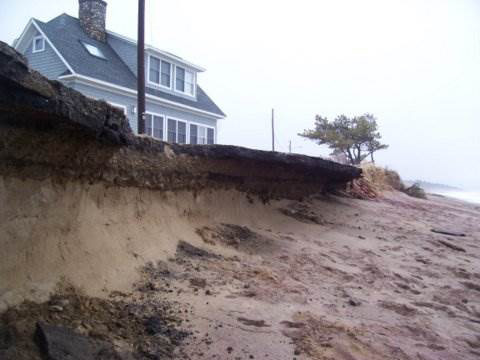
This development needs satellite imagery, land surveys, regional mapping, population data — ground truths. The usual works. Now, it turns out after approval and construction that this structure of coastal homes and hotels will be swept away to sea. In doing so, not only is the burden of loss rippled across lives and economies, there is ecological damage. A tenure of wilted ideas that lay forever in the brush.
Sure, this fictional town’s ecological studies may have approved this development on paper due to structured bureaucratic limitations, financial incentives and human desire — but! no matter how compliant the stamp is, the physics of reality predicted its failure.
An observed reality without bias could have given recommendations on salinity trends, groundwater, erosion, storm probability due to water temps and a wildly deep array of more intelligence about this decision.
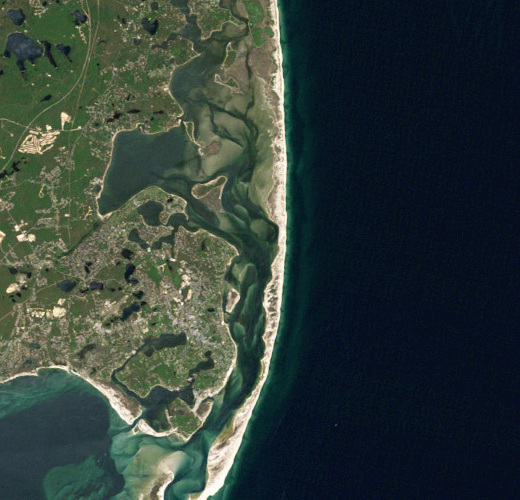
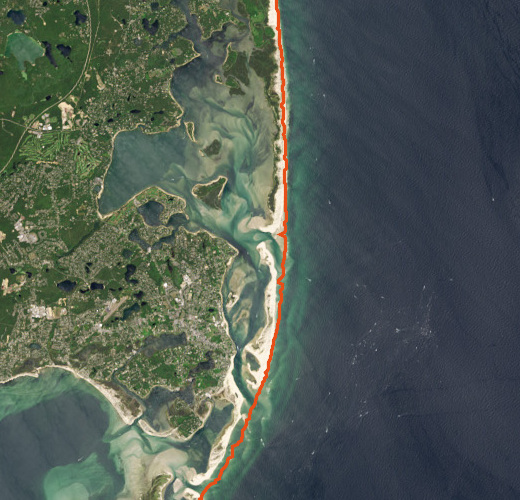
Chatham Harbor, Massachusetts. Orange traces the approximate Atlantic edge of the barrier beach in the 1984 image. Jesse Allen and Robert Simmon, NASA Earth Observatory · USGS Landsat
Instead, a need, use or want outweighed the reality.
It is known that the benefits and bereavements of bureaucracy can be debated into a wall. Yet, there is a better way to begin the conversation.
Bureaucracy, by design is functional for systems engineering, process flow and understanding. However its resulting data pipelines have linear decision constraints. A->B->C = Approval. Instead, why can’t we think in a geodesic node language? An observational grammar where reality sets the table, then markets and needs work within those constraints, as opposed to the other way around.
A satellite’s sensors will see the world through optical, SAR (radar that sees through clouds), thermal and spectral bands to visualize reality. These sensors are claims of reality, when formed in composite with other sensors form a high-confidence view removing uncertainty and informing a more precise view of reality.
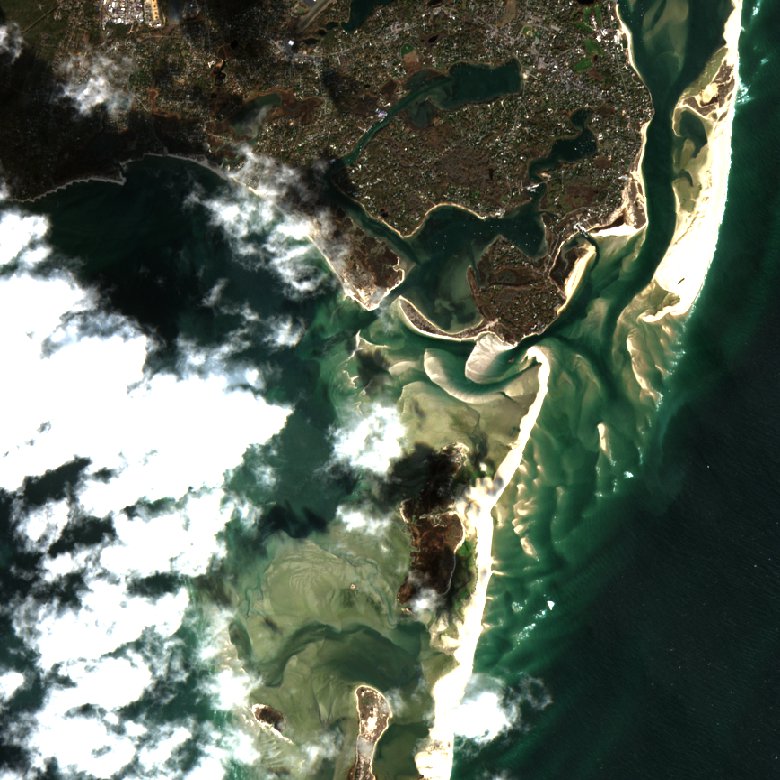
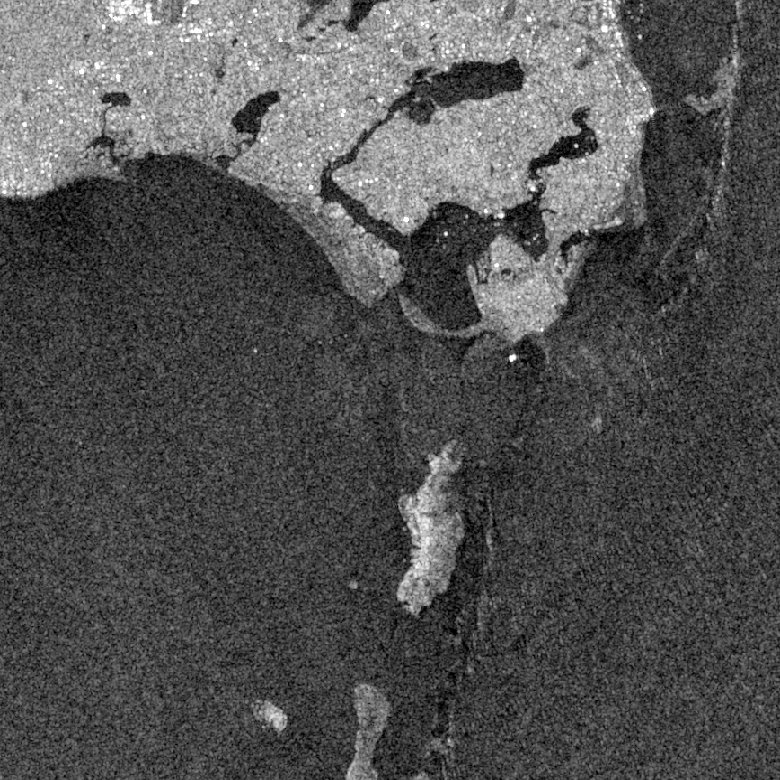
Chatham, 9 November 2024. Clouds cover part of the southern shore in the optical image. Seven hours later, radar picks out the channels and the narrow barrier beach. Contains modified Copernicus Sentinel data (2024). ESA on mapping water with optical and radar sensors
Once that composite view of reality is formed from sensors of all types, you can create a system with shortened lines of evidence. The distance of truth may no longer be a subjective request constrained by linear chains of command. Instead, facts are a result of latency, coverage and resolution with an organic and evolving topology.
True, even these sensors of reality can and will be wrong, they will be out dated, they will have computational or calibration drift. So this ‘truth’ has to come with a caveat of humility, that even it can be wrong and admit when quality assurance is low, then learn — so you build into the DNA of our Observational Grammar a knowledge core which can feed its lessons back through the system.
When we can build upon that ontology of a living observer, the market vertical application of everything observable on earth becomes the best version of itself.
Then ideally, a new paradigm of observational grammar for agriculture, climate change, land use, defense, commercial and intelligence sits at the ready. Things we’ve seen become known. Things we’ve known become seen. The inkling of an idea that’s been scratching in the back left-corner of your mind emerges in clarity.
The market, commercial viability, social instinct, social responsibilities, and all of our hopes are a simply a lens. Phenomena are the landscape of reality.